On May 2, 2017, Microsoft unveiled Windows 10 S , a feature-limited edition of Windows 10 which was designed primarily for devices in the education market , such as the Surface Laptop that Microsoft also unveiled at this time. The OS restricts software installation to applications obtained from Microsoft Store; the device may be upgraded to Windows 10 Pro for a fee to enable unrestricted software installation. As a time-limited promotion, Microsoft stated that this upgrade would be free on the Surface Laptop until March 31, 2018. Windows 10 S also contains a faster initial setup and login process, and allows devices to be provisioned using a USB drive with the Windows Intune for Education platform. Our mission with Windows is to build a platform that inspires creativity in each of us.
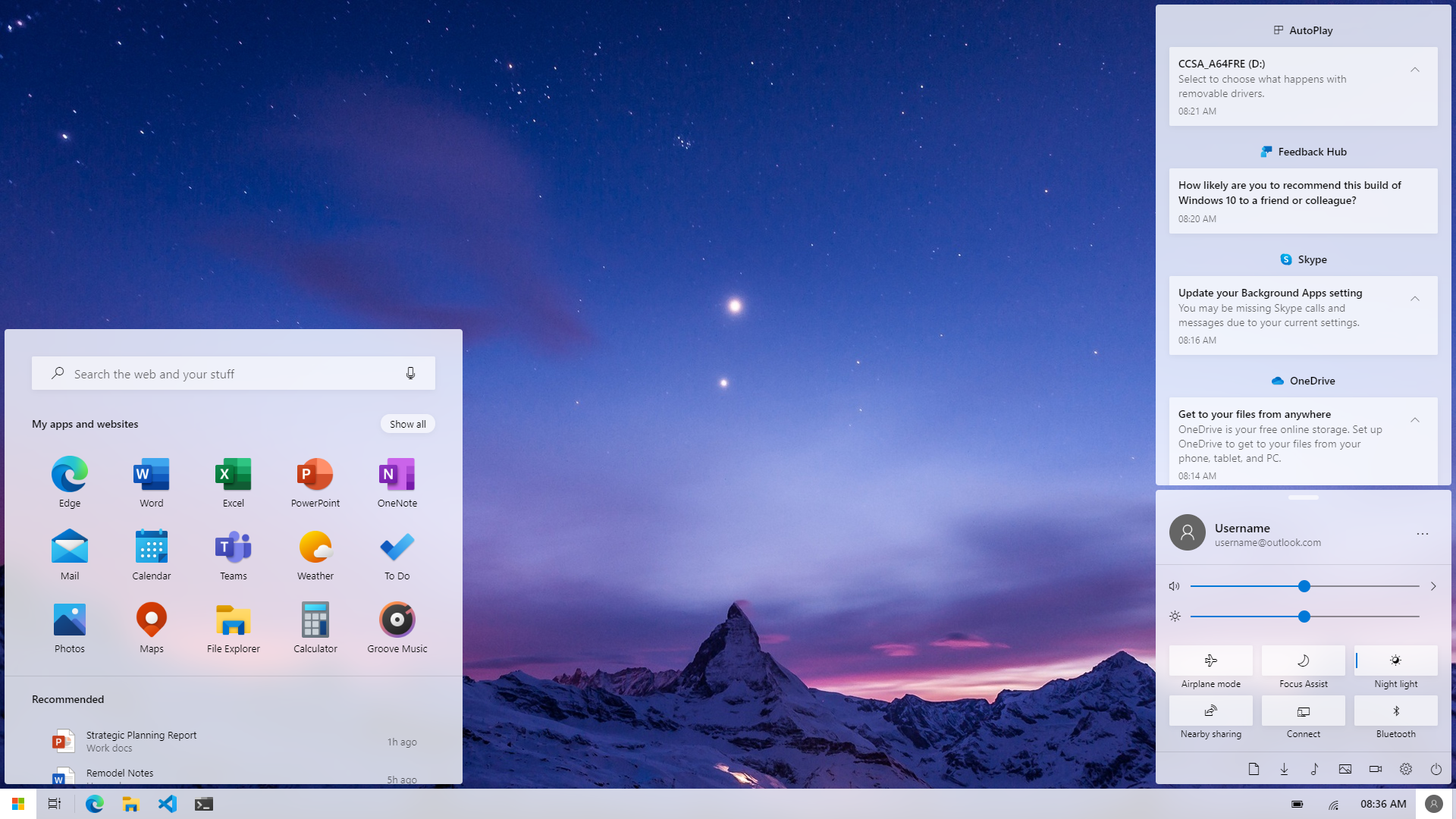
With Windows, not only do we want to build a platform that inspires creativity in each of us – we also want customers to have choice around the best Windows for their needs. Back in May, we introduced a new set of educational products and services, including the introduction of Windows 10 S. Windows 10 S is the next step of our Windows journey by offering customers a familiar Windows 10 experience, streamlined for security and performance. Extended support until January 13, 2032The original release of Windows 10 receives mainstream support for five years after its original release, followed by five years of extended support, but this is subject to conditions. Microsoft stated that these devices would no longer receive feature updates, but would still receive security updates through January 2023.

Microsoft will continue to support at least one standard Windows 10 release until October 14, 2025. The upgrade offer was marketed and initiated using the "Get Windows 10" application, which was first downloaded and installed via Windows Update in March 2015. Registry keys and group policies could be used to partially disable the GWX mechanism, but the installation of patches to the GWX software via Windows Update could reset these keys back to defaults, and thus reactivate the software.

Third-party programs were also created to assist users in applying measures to disable GWX. 10 heavily emphasizes freemium services, and contains various advertising facilities. Some outlets have considered these to be a hidden "cost" of the free upgrade offer. This edition is designed for "special-purpose devices" that perform a fixed function .
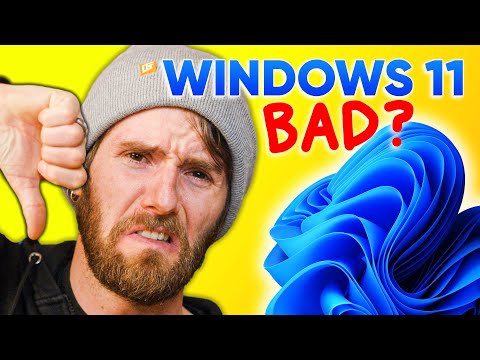
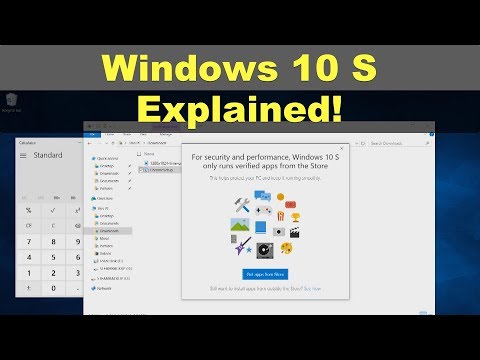
For this reason, it excludes Cortana, Microsoft Store, and all bundled Universal Windows Platform apps . Windows 10S allows users to experience a faster and more secure version of Windows, but this includes limitations. While using Windows 10S, users can only install and use applications that are downloaded through the Microsoft Store. Additionally, Microsoft Edge is always set as the default browser, though other browsers are available for download through the Microsoft Store.

While Microsoft recommends that users still use a security program while running in Windows 10S, the only compatible security program is Windows Defender Security Center. Many additional pieces of hardware, including printers, mice, and keyboards, work with Windows 10S, but some are incompatible with the system. Windows 10S is available for Windows Enterprise and Windows Education mode. Many think that Windows 10s was brought to market to compete with Google's Chrome OS, which was introduced earlier and has almost the same features Windows 10s has.

Like Chrome OS Windows 10s is usually used in school computers to keep the use of computers to a minimal standard. This mode of windows is also used in various enterprise uses to prevent any kind of security breach as the apps running on this OS are strictly checked and scanned for any kind of malware and bugs or virus. The only visible disadvantage from the user's end is the third-party app issue. Because, when it was first introduced and was told that third-party apps cannot be installed on this OS, back then Microsoft Store was not so enriched with so many apps like it has today. Over the years Microsoft Store is including more and more apps like Netflix, Spotify, iTunes, Facebook, etc.
So, the problem regarding app shortage on Microsoft store is fading away day by day, so is the reason behind not using Windows 10s. This is how this new mode of windows is getting popular every day. Windows 10 received generally positive reviews upon its original release.
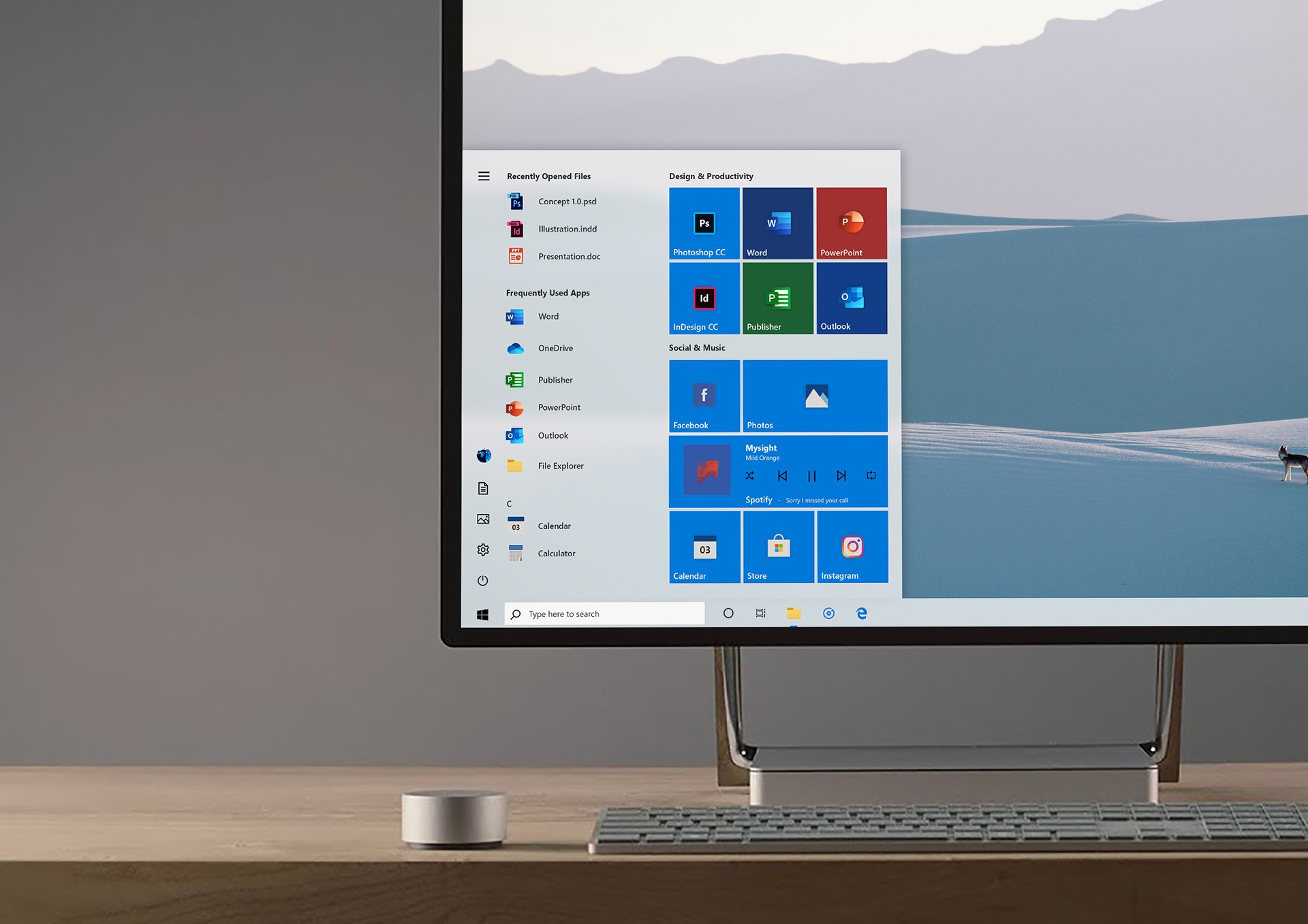
A new iteration of the Start menu is used on the Windows 10 desktop, with a list of places and other options on the left side, and tiles representing applications on the right. The menu can be resized, and expanded into a full-screen display, which is the default option in Tablet mode. A new virtual desktop system was added by a feature known as Task View, which displays all open windows and allows users to switch between them, or switch between multiple workspaces. Universal apps, which previously could be used only in full screen mode, can now be used in self-contained windows similarly to other programs. Program windows can now be snapped to quadrants of the screen by dragging them to the corner.
When a window is snapped to one side of the screen, Task View appears and the user is prompted to choose a second window to fill the unused side of the screen (called "Snap Assist"). The new Start menu takes after Windows 7's design by using only a portion of the screen and including a Windows 7-style application listing in the first column. Myerson said that these changes would occur in a future update, but did not elaborate.
Windows Phone 8.1 would share nearly 90% of the common Windows Runtime APIs with Windows 8.1 on PCs. Microsoft is targeting Chrome OS users, and the education market in particular. These types of users generally are just running simple programs and using cloud-based applications and services for their primary computer needs.
In education markets in particular, this offers a fast and easy way to deploy devices and keep them relatively secure for basic applications. In March 2016, some users also alleged that their Windows 7 and 8.1 devices had automatically begun upgrading to Windows 10 without their consent. In June 2016, the GWX dialog's behavior changed to make closing the window imply a consent to a scheduled upgrade. It was concluded that these users may have unknowingly clicked the "Accept" prompt without full knowledge that this would begin the upgrade. Other critics argued that Microsoft should not have triggered any downloading of Windows 10 installation files without user consent.

Is Windows 10S Good Feature updates prior to version 1909 are distributed solely as an in-place upgrade installation, requiring the download of a complete operating system package (approximately 3.5 GB in size for 64-bit systems). Unlike previous builds, version 1909 is designed primarily as an update rollup version of 1903, focusing primarily on minor feature additions and enhancements. For upgrades to 1909 from 1903, a new delivery method is used where its changes were delivered as part of the monthly cumulative update, but are left in a dormant state until the 1909 update "enablement" patch is installed. The full upgrade process is still used for those using builds prior to 1903. With Windows 10 S, Microsoft is trying to create a harmonious ecosystem of apps and services targeted mostly for education.

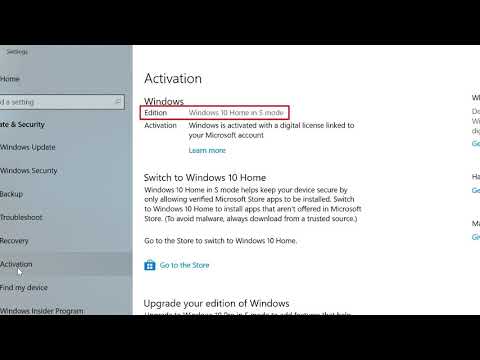
With that in mind, Microsoft pulled out a couple of features, added optimisations where it matters (battery life and performance, hell yes!), and made it all work together. Windows 10 in S mode is a specific configuration of Windows 10 Pro designed for added security and performance. Windows 10 in S mode uses Microsoft Edge as its browser and uses apps from the Windows Store only to enhance performance and security.
Certain default settings, features, and apps cannot be changed. Some accessories and apps compatible with Windows 10 might not work , and performance might vary, even if you switch to Windows 10 Pro configuration . For more information, go to Microsoft webpage Windows 10 in S Mode FAQ . Windows 8 was arguably a failure, and we can see very few reasons why you might want to use it over Windows 10. The start menu is far less jarring, providing modern tools and layouts sprinkled with enough familiarity that users won't feel alienated.

There's a host of new security and productivity features, with more being added all the time, and the migration to Windows 10 is far smoother than anything experienced in the past. Streamlined for security and performance, while providing a familiar Windows experience'. The way this is done is by only allowing apps found on the Microsoft Store to be installed on the device.
While this can be fine if you only use Microsoft 365, Edge, and a handful of apps from the store, you'll soon run into issues if you want to use any other software. On December 7, 2016, Microsoft announced that, as part of a partnership with Qualcomm, it planned to introduce support for running Win32 software on ARM architecture with a 32-bit x86 processor emulator, in 2017. Microsoft is initially targeting this project towards laptops. 10 Home and Pro is "Semi-Annual Channel " (formerly "Current Branch", or "CB"), which receives stable builds after they are publicly released by Microsoft.

Each build of Windows 10 is supported for 18 months after its original release. In enterprise environments, Microsoft officially intends that this branch is used for "targeted" deployments of newly released stable versions so that they can be evaluated and tested on a limited number of devices before a wider deployment. Device Guard is designed to protect against zero-day exploits, and runs inside a hypervisor so that its operation remains separated from the operating system itself.
The Windows Runtime app ecosystem was revised into the Universal Windows Platform . These universal apps are made to run across multiple platforms and device classes, including smartphones, tablets, Xbox One consoles, and other devices compatible with Windows 10. Windows 10 is a major release of the Windows NT operating system developed by Microsoft. It is the successor to Windows 8.1, which was released nearly two years earlier, and itself was released to manufacturing on July 15, 2015, and broadly released for the general public on July 29, 2015.

Windows 10 was made available for download via MSDN and TechNet, as a free upgrade for retail copies of Windows 8 and Windows 8.1 users via the Windows Store, and to Windows 7 users via Windows Update. Windows 10 receives new builds on an ongoing basis, which are available at no additional cost to users, in addition to additional test builds of Windows 10, which are available to Windows Insiders. Devices in enterprise environments can receive these updates at a slower pace, or use long-term support milestones that only receive critical updates, such as security patches, over their ten-year lifespan of extended support. Windows 10 S doesn't have better performance than Windows 10 out of the box. Fast-forward to a year post-installation, though, and the story might be a bit different.
As most of us know, without proper maintenance, Windows slows down over time as downloaded programs fill our startup queue, registry, and services. Windows 10 S sidesteps this issue because Windows Store apps cannot add themselves to the startup folder and so cannot begin automatically eating up your resources upon login. Thus, a year after installation, Windows 10 S should start-up just as quickly as the day it was installed. You can achieve the same thing with Windows 10 vanilla, but you can't be installing programs without maintenance. Windows 10 S gives schools the familiar, robust and productive experiences they count on from Windows –in an experience streamlined for security and superior performance in the classroom, built to work with Microsoft Education. By exclusively using Microsoft-verified apps in the Windows Store and ensuring that you browse safely with Microsoft Edge, Windows 10 S keeps devices running fast and secure every day of the school year.
Without doubt, Windows 8's initial insistence on imposing the tiled Start screen on devices that didn't even have a touchscreen ruined any chance of the operating system ever getting widespread business adoption. 10 product keys, meaning they could be entered during installation to activate the free license, without the need to upgrade first to "activate" the hardware with Microsoft's activation servers. Since the release of the Fall Creators Update , Microsoft decided to release multi-edition installation media, to alleviate installation and product activation issues users experienced because of accidentally installing the wrong edition of Windows 10. As part of Microsoft's unification strategies, Windows products that are based on Windows 10's common platform but meant for specialized platforms are marketed as editions of the operating system, rather than as separate product lines. An updated version of Microsoft's Windows Phone operating system for smartphones, and also tablets, was branded as Windows 10 Mobile. The Anniversary Update added Windows Subsystem for Linux , which allows the installation of a user space environment from a supported Linux distribution that runs natively on Windows.
The subsystem translates Linux system calls to those of the Windows NT kernel . The environment can execute the Bash shell and 64-bit command-line programs (WSL 2 also supports 32-bit Linux programs and graphics, assuming supporting software installed, and GPUs support for other uses). Windows applications cannot be executed from the Linux environment, and vice versa. Linux distributions for Windows Subsystem for Linux are obtained through Microsoft Store. The feature initially supported an Ubuntu-based environment; Microsoft announced in May 2017 that it would add Fedora and OpenSUSE environment options as well. Some Windows 11 users are complaining that they're now forced to use Microsoft Edge as their web browser.

This complaint has garnered more than its fair share of noise—but it's misleading. You can use any web browser you choose on Windows 11, though some limited OS functions like the built-in search and weather features do automatically open Edge. I've happily installed Firefox and Chrome on the new operating system. Nevertheless, after some initial reservations, I've come to appreciate Edge's design and conveniences, which make Chrome and Firefox look outdated and limited. By the way, try changing the default browser on Chrome OS or on iOS or iPad OS.

While there are plenty of browsers in the Apple App Store, Cupertino forces them to use Apple's Safari web browser as the underlying web rendering engine. In Windows 10 S mode, you'll find the familiar Windows start menu, have Cortana as your digital assistant with speech recognition and you can download your Windows apps in the Windows Store in all versions. Digital drawing with Windows Ink and using face recognition to log in via Windows Hello is possible with 10 S, Home and Pro, provided your laptop supports this. Microsoft has also been commendably wary of forcing businesses to install the same rolling updates to Windows 10 that are now mandatory for consumers, who can no longer opt out of Windows Updates.

Windows 10 Pro users, meanwhile, can defer updates, giving new features a few months to bed down on consumer systems before they're applied to a business machine. However, due to the lack of opportunity of using any apps outside the Microsoft store, users often are more interested in switching windows 10s mode back to the normal windows 10 or windows 10 pro version. Once you switch back to the normal windows version you will not be able to switch back to the S mode. As of the May 2019 update, the minimum disk space requirement has been increased to 32 GB.
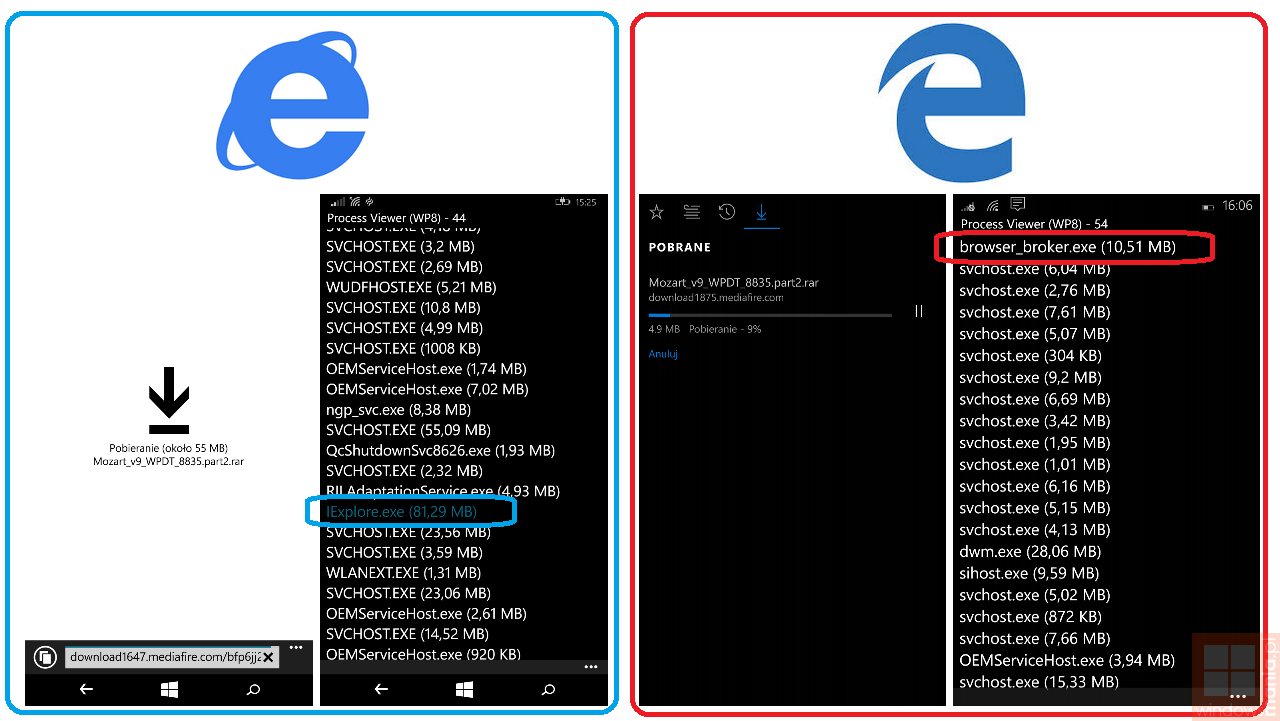
In addition, on new installations, Windows permanently reserves up to 7 GB of disk space in order to ensure proper installation of future feature updates. Windows 10 introduces Microsoft Edge, a new default web browser. It initially featured a new standards-compliant rendering engine derived from Trident, and also includes annotation tools and integration with other Microsoft platforms present within Windows 10.

Internet Explorer 11 is maintained on Windows 10 for compatibility purposes, but is deprecated in favor of Edge and will no longer be actively developed. In January 2020, the initial version of Edge was succeeded by a new iteration derived from the Chromium project and the Blink layout engine and the old Edge based on EdgeHTML is now called 'Microsoft Edge Legacy'. The legacy version of Edge is currently being replaced by the new Chromium-based Edge via Windows Update, though this version can also be downloaded manually.

Every Windows 10 version from 20H2, which was released on October 20, 2020, will come with the new version of the browser preinstalled. The Windows 10 October 2020 update added a price comparison tool to the Edge browser. While Windows 10 in S Mode might not be the powerhouse of productivity that some heavy-handed users may be accustomed to, it certainly does shine for others.

In the world of education, Windows 10 in S Mode provides students with the tools they need to work and collaborate safely without taking a security risk. For older users who might not be up to date on the latest in tech and cybersecurity, Windows 10 in S Mode provides a way for them to still stay connected on a fast device that doesn't put their data at risk. Finally, for the basic email-checking, Facebook-scrolling, YouTube-watching internet user, Windows 10 in S Mode helps keep your device running at its peak performance without sacrificing access to your favorite apps. The only web browser you can use in Windows 10 in S mode is Microsoft Edge. The apps for Chrome and Firefox are not available in the Windows Store .




No comments:
Post a Comment
Note: Only a member of this blog may post a comment.